Violencia by Jason Webster
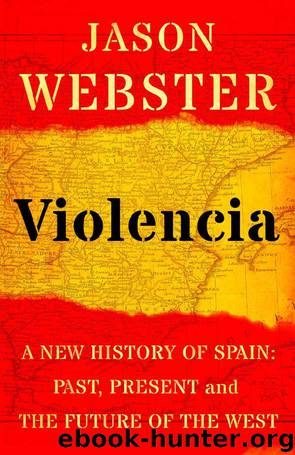
Author:Jason Webster [Webster, Jason]
Language: eng
Format: epub
ISBN: 9781472129826
Publisher: Little, Brown Book Group
Published: 2019-10-02T22:00:00+00:00
Other ingredients, however, do appear to have vanished from the Spanish kitchen in the wake of the Inquisition’s cultural purges. Unleavened bread was a staple, but was stamped out. Moorish recipes commonly use coriander, yet when I first lived in Spain in the early 1990s, the herb was unknown. It later made a reappearance with the influx of immigrants from Latin America in the 2000s, who unwittingly brought back with them flavours which had originally been Spanish and had travelled with the Conquistadors across the Atlantic in the first place. Another example is couscous, which was very common in Moorish Spain, so much so that it gave birth to the Spanish word alcuzcúz. Yet having been wiped from collective memory by the spirit of the Inquisition, when it made a reappearance in the late twentieth and early twenty-first century in Moroccan bars and restaurants, Spaniards referred to it as el cuscús, unaware that their own dictionaries already had a word for this ‘new’ exotic dish from across the Strait.
There is even a suspiciously Moorish angle to Spain’s obsession with eating pork. Yes, it is permitted by Christianity and forbidden by Islam and Judaism, but in many ways Moorish traditions surrounding lamb appear to have been grafted wholesale on to the unsuspecting pig. As the Spanish today use every conceivable part of the animal in their cooking, even the ears, so Moorish cookbooks recommended the same for lamb, and recipes for it far outweigh those for chicken and beef. And as Muslims ritually slaughter a lamb once a year on the Eid al-Adha festival, so it was common until relatively recently in Spain for every family to kill a pig on the feast of St Martin. Likewise, a dish my wife often makes, arroz con espinacas, could easily come from the Middle East: simply substitute the pork with lamb and add coriander and other spices which disappeared in the past, and you have something recognisable as far away as India. The meat in question has changed, but structurally there are many similarities.2
A similar case of a food falling foul of the political correctness of its times is the humble ensaladilla rusa – ‘Russian salad’ – found in bars practically everywhere across Spain. Made with a variety of ingredients including peas, potato, olives and peppers mixed together with mayonnaise, during the Spanish Civil War it had to be re-baptised in Francoist areas as ensaladilla nacional, as anything ‘Russian’ was considered communist and therefore offensive. Likewise a coffee made with meringue milk known as a ruso had to be called a nacional.
Modern Spain has moved in new culinary directions, most notably with a healthy number of Michelin-starred restaurants and chefs such as Ferrán Adriá who have become international cooking stars. Innovation has been the watchword, and for a while it seemed that all foods, including Spanish standards such as gazpacho and tortilla de patata, were to be converted into concentrated and very small portions of flavoured foam as part of the new culinary wave.
Download
This site does not store any files on its server. We only index and link to content provided by other sites. Please contact the content providers to delete copyright contents if any and email us, we'll remove relevant links or contents immediately.
| Africa | Americas |
| Arctic & Antarctica | Asia |
| Australia & Oceania | Europe |
| Middle East | Russia |
| United States | World |
| Ancient Civilizations | Military |
| Historical Study & Educational Resources |
Cat's cradle by Kurt Vonnegut(15351)
Pimp by Iceberg Slim(14506)
4 3 2 1: A Novel by Paul Auster(12391)
Underground: A Human History of the Worlds Beneath Our Feet by Will Hunt(12097)
The Radium Girls by Kate Moore(12028)
Wiseguy by Nicholas Pileggi(5782)
The Fire Next Time by James Baldwin(5442)
Perfect Rhythm by Jae(5402)
American History Stories, Volume III (Yesterday's Classics) by Pratt Mara L(5307)
Paper Towns by Green John(5189)
Pale Blue Dot by Carl Sagan(5007)
A Higher Loyalty: Truth, Lies, and Leadership by James Comey(4960)
The Mayflower and the Pilgrims' New World by Nathaniel Philbrick(4502)
The Doomsday Machine by Daniel Ellsberg(4490)
Killers of the Flower Moon: The Osage Murders and the Birth of the FBI by David Grann(4447)
The Sympathizer by Viet Thanh Nguyen(4390)
Too Much and Not the Mood by Durga Chew-Bose(4347)
The Borden Murders by Sarah Miller(4325)
Sticky Fingers by Joe Hagan(4197)
